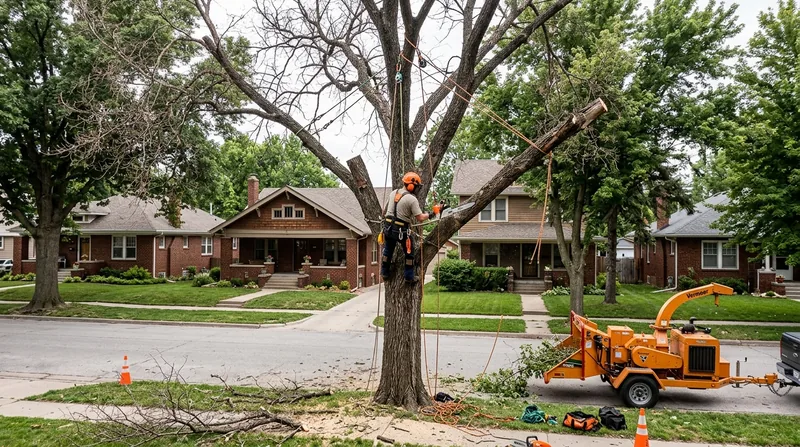




Tree Removal in Lincoln requires more than a chainsaw and a truck. Lincoln's mix of mature oaks, maples, and pines on residential lots, near power lines, and close to homes demands precision, safety equipment, and local permitting knowledge. Whether a tree is dead, diseased, hazardous, or simply in the way, removing it safely protects your property, your neighbors, and anyone working on the job. Lincoln Tree Service has been handling complex removals across Lincoln and surrounding communities since 2015, using full rigging, crane access when needed, and crews trained to work around fences, structures, and utility lines. We understand Lincoln's terrain, the species common to this region, and the permit requirements that apply when you cut down a protected or heritage tree. This guide walks you through why tree removal matters, how we approach the work, what it costs, and what to look for when hiring a professional.
Why Tree Removal Matters in Lincoln
A dead, diseased, or structurally compromised tree is a liability. Lincoln's weather patterns, from heavy spring storms to ice loads in winter, put stress on aging trees. A tree leaning toward your roof, shedding large branches, or showing signs of decay can fail without warning. Removing it before failure happens protects your home, your family, and your neighbors. Beyond safety, some removals are necessary for property redevelopment, to improve sight lines, to reduce competition for younger trees, or to comply with HOA rules and local ordinances. Getting a hazardous tree off your property quickly and correctly is one of the smartest investments a homeowner can make.
- A dead or dying tree poses a falling risk to structures, vehicles, and people on your property or nearby.
- Trees with large cavities, cracks, or lean angles often fail in storms or high winds without warning.
- Some removals are required by local code if the tree is on a utility easement or near power lines.
- Removing a tree before it fails eliminates the risk of emergency removal costs and liability claims.
- Clearing space for new construction, landscaping, or sunlight often requires removal of existing mature trees.
Safe removal prevents property damage, injury, and the spike in costs that comes with emergency situations.
Key info: Lincoln and nearby cities including Waverly, Hickman, and Crete enforce tree removal permits for trees above a set diameter. Heritage oak and protected species may require additional approval. Check your local city code or contact us at (531) 229-0743 to confirm requirements before you cut. Many homeowners discover permit violations after the fact, resulting in fines and required replanting.
For more detail on local regulations, see the City of Lincoln Code for tree protection ordinances and permitted species.
How Lincoln Tree Service Removes Trees Safely
Tree removal is a sequence of decisions, not a single cut. We start with an on-site assessment to identify hazards, plan the safest takedown sequence, and determine whether rigging, a crane, or sectional felling is the right approach. Lincoln properties often feature trees near houses, fences, and power lines, so we use specialized rigging to lower large sections instead of dropping them. We clear the work zone, protect nearby structures with tarps or barriers, and dispose of all debris responsibly. The entire process, from first cut to cleanup, follows industry safety standards and local code.
- We conduct a detailed site inspection to assess tree health, lean, size, and proximity to buildings and utilities.
- We obtain or verify local permits and HOA approval before any work begins on your property.
- We use rigging and rope systems to lower large sections safely, preventing damage to nearby structures and landscapes.
- We operate a wood chipper on-site or haul away logs and debris, leaving your yard clear and clean.
- We can coordinate with utility companies if the tree is near power lines or requires de-energizing.
Every removal is customized to the site, the tree, and the hazards present.
Local example: A 60-foot oak in a Lincoln backyard near a fence and detached garage requires rigging to lower the trunk in sections rather than felling it whole. We rope each section, lower it to the ground, cut it into manageable pieces, and chip or haul away the wood. The same tree in an open field would be felled in one or two cuts. Site-specific planning keeps everyone safe and your property intact.
After removal, many homeowners choose stump grinding to reclaim the full yard space and prevent regrowth.
Tree Removal Methods and Approaches
| Approach | Description | Best for |
|---|---|---|
| Rigging and Lowering | Sections are roped and lowered to the ground under controlled tension using pulleys and anchor points. | Trees near homes, fences, power lines, and structures where dropping wood is unsafe. |
| Sectional Felling | Tree is cut into sections from top to bottom, each section felled or lowered as conditions allow. | Large trees in tight spaces where a single drop would cause damage or injury risk. |
| Crane Removal | A mobile or tower crane lifts large sections or the entire trunk, removing it in one or two lifts. | Very large trees, limited ground access, or situations where rigging alone is impractical. |
| Whole-Tree Felling | Tree is cut at the base and allowed to fall in a single motion, typically in one or two pieces. | Open areas, rural properties, or situations where no nearby structures or utilities are at risk. |
We choose the safest and most efficient method based on your specific site conditions and the tree itself.
Tree Removal Cost in Lincoln: What to Expect
Tree removal pricing in Lincoln depends on several concrete factors: tree height, diameter, species, proximity to structures, access for equipment, and the removal method required. A small 30-foot pine in an open yard costs significantly less than a 70-foot oak near a house that requires rigging and crane support. We provide a free estimate after an on-site inspection so you know exactly what you are paying for before we start work. Getting 2 to 3 estimates from licensed and insured contractors is smart practice because every site presents different challenges and different crews may recommend different approaches.
- Tree size and height are the primary cost drivers; a 40-foot tree costs less to remove than an 80-foot tree.
- Proximity to buildings, fences, power lines, and utilities increases complexity and cost due to rigging or crane needs.
- Species and wood density affect the time and equipment required; a dense oak takes longer to cut and haul than a pine.
- Site access, driveway width, and gate size determine whether we can position a chipper or require manual hauling.
- Permit costs are separate and are the homeowner's responsibility in most Lincoln jurisdictions; we can advise on requirements.
Call (531) 229-0743 for your free estimate and a detailed breakdown of what the removal will entail.
For a full pricing overview and to see typical cost ranges for different job sizes, visit our pricing page.
Tree Removal Near Me: What Lincoln Homeowners Should Know When Hiring
Choosing the right tree service protects your property and your wallet. Not all contractors carry the same insurance, experience, or commitment to safety. A licensed and insured company carries general liability and workers compensation, so if something goes wrong, you and your property are covered. Ask for proof of insurance and a current business license. Check references from recent jobs in Lincoln or nearby towns. Understand whether the contractor will handle permits or if you need to apply yourself. For HOA properties or trees near power lines, confirm that the contractor knows local rules and can navigate approvals. Finally, get the estimate in writing so there are no surprises when the invoice arrives.
- Verify that the contractor holds current general liability and workers compensation insurance before hiring.
- Request references from at least two recent removals in Lincoln or surrounding areas and follow up with those homeowners.
- Confirm that the contractor understands local tree removal permits and protected tree ordinances in your city.
- Ask whether your HOA or property line agreements require approval before removal and who handles that coordination.
- Get a detailed written estimate that includes tree size, removal method, debris disposal, and any permit costs.
- Verify that the contractor has a physical business address and has been in operation for at least a few years.
Lincoln Tree Service has been licensed and insured since 2015 and serves Lincoln, Waverly, Hickman, Crete, and surrounding communities. Contact us at (531) 229-0743 or visit our contact page to request your free estimate.
Tree Removal in Lincoln: Pricing Guide
| Service | Price | Details |
|---|---|---|
| Small tree removal | Starting at $300 | Trees up to 30 feet, good access, minimal rigging required, includes cleanup and chip |
| Medium tree removal | Starting at $800 | Trees 30 to 60 feet, moderate rigging, proximity to structures, partial debris haul included |
| Large or complex removal | Starting at $2,000 | Trees over 60 feet, crane access needed, multiple hazards, full rigging and debris removal included |
| Emergency removal | On estimate | Storm damage or hazard trees requiring same-day or next-day response, emergency pricing applies |
| Free estimate | No obligation | On-site inspection, detailed quote within 24 hours, includes permit requirements and method recommendation |
Indicative pricing, the exact cost depends on square footage, finish, and site access. Free personalized estimate within 24h at (531) 229-0743.


